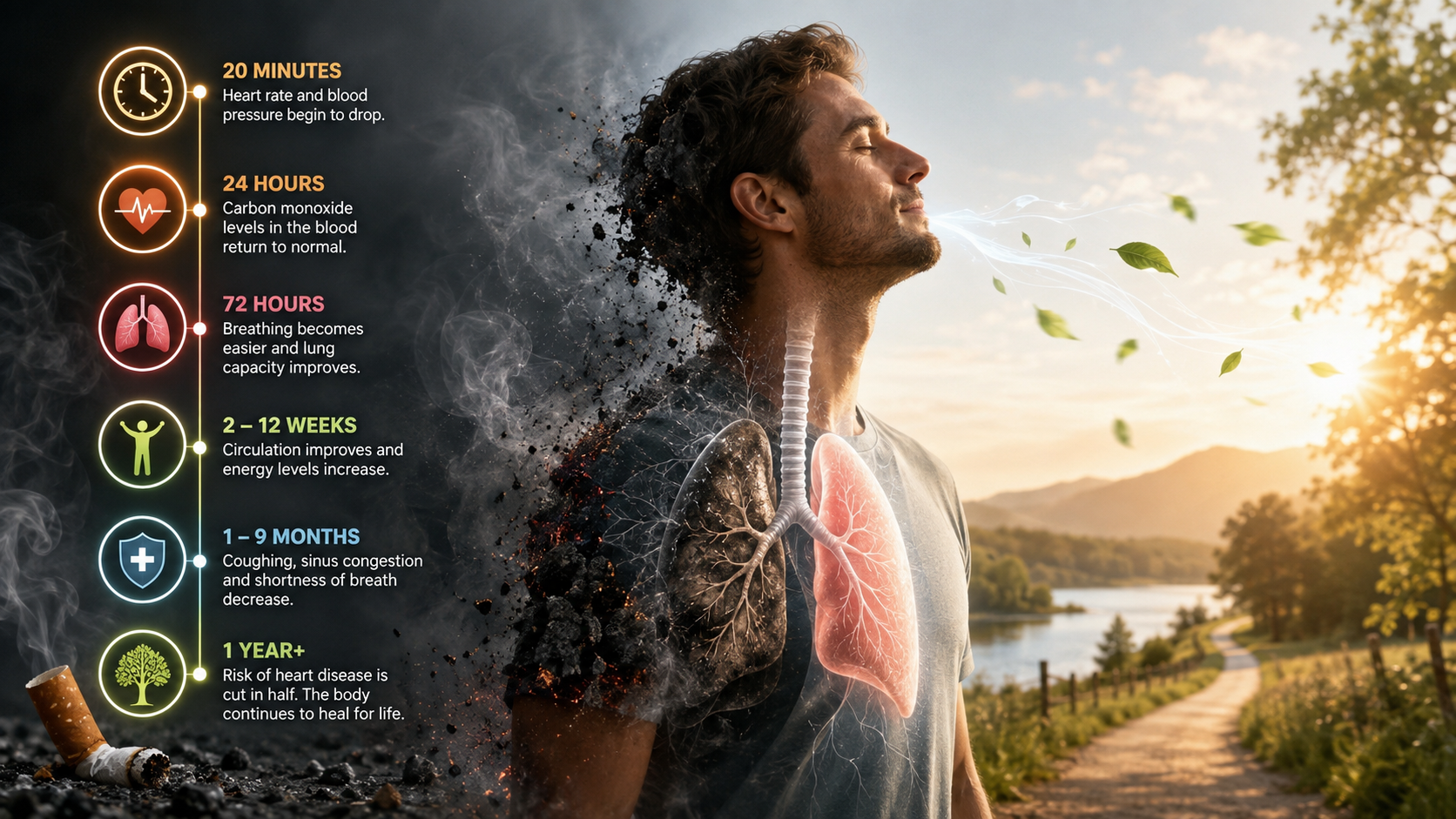
Benefits of Quitting Smoking Timeline: What Happens to Your Body After You Quit

Many smokers know that quitting is good for their health, but few realize how quickly the body begins repairing itself after the last cigarette.

Within minutes of quitting smoking, positive changes begin taking place throughout the body. Over the following days, weeks, months, and years, the risk of smoking-related diseases continues to decline while physical and mental health gradually improve.

Understanding the benefits of quitting smoking can provide powerful motivation during difficult moments. Every craving resisted and every smoke-free day allows the body another opportunity to heal.

Want the complete roadmap to becoming a non-smoker? Start with our Subconscious Quit Smoking Guide to learn how cravings, triggers, hypnosis, relapse prevention, and behavioral change work together to create lasting freedom from smoking.


Read More

Smoking Triggers: Why You Crave Cigarettes and How to Break the Habit

Many smokers assume that cigarettes are only about nicotine. While nicotine addiction plays an important role, it is often not the biggest reason people continue smoking.

Long after nicotine has left the body, certain situations, emotions, places, and routines can still create powerful cravings. These are known as smoking triggers.

Understanding your triggers is one of the most important steps toward becoming smoke-free. Once you recognize why cravings occur, you can begin breaking the automatic patterns that keep smoking in place.

Want the complete roadmap to becoming a non-smoker? Start with our Subconscious Quit Smoking Guide to learn how cravings, triggers, hypnosis, relapse prevention, and behavioral change work together to create lasting freedom from smoking.

Read More

Weight Gain After Quitting Smoking: Causes, Prevention, and What to Expect

Many smokers want to quit but hesitate because of one common fear: weight gain. Stories of people gaining 10, 20, or even 30 pounds after quitting cigarettes can make the idea of becoming smoke-free feel less appealing.

The reality is much more encouraging. While some people do gain weight after quitting smoking, many maintain their weight, and some even lose weight as they adopt healthier habits. More importantly, the health benefits of quitting smoking far outweigh the risks associated with modest weight gain.

Understanding why weight gain happens after quitting smoking can help you prepare for the transition, manage cravings more effectively, and stay focused on long-term success.

Want the complete roadmap to becoming a non-smoker? Start with our Subconscious Quit Smoking Guide to learn how cravings, triggers, hypnosis, relapse prevention, and behavioral change work together to create lasting freedom from smoking.

Read More

Nicotine Withdrawal Timeline: What to Expect When You Quit Smoking

Nicotine withdrawal is one of the biggest reasons smokers struggle to quit successfully. Many people know they want to stop smoking, but fear of cravings, anxiety, irritability, brain fog, and other withdrawal symptoms often keeps them trapped in the cycle of addiction.

If you’re wondering how long nicotine withdrawal lasts, the good news is that the most intense symptoms are temporary. While cravings and discomfort can feel overwhelming in the moment, they are actually signs that your body and brain are beginning to recover from nicotine dependence.

Understanding what to expect can make the quitting process far less intimidating. When you know which symptoms are normal, when they typically appear, and how long they usually last, you’re less likely to panic or mistake temporary withdrawal for permanent suffering.

In this guide, you’ll learn exactly what happens during nicotine withdrawal, which days tend to be the most challenging, how long cravings typically last, and practical strategies that can make the transition to a smoke-free life much easier.

Want the complete roadmap to becoming a non-smoker? Start with our Subconscious Quit Smoking Guide to learn how cravings, triggers, hypnosis, relapse prevention, and behavioral change work together to create lasting freedom from smoking.

Read More

Crown Chakra Block Symptoms: 9 Signs Your Crown Chakra Is Out of Alignment

If you feel spiritually disconnected, struggle to find meaning, feel lost despite external success, or experience a persistent sense of emptiness, your Crown Chakra may be blocked.

The Crown Chakra is the center of spiritual connection, higher consciousness, wisdom, purpose, and universal awareness. It governs your ability to feel connected to something greater than yourself and experience life from a broader perspective.

When your Crown Chakra is balanced, you feel peaceful, connected, purposeful, and open to life’s deeper meaning. When it is blocked, life can begin to feel isolating, confusing, empty, or disconnected from purpose.

In this guide, you’ll learn the most common crown chakra block symptoms, what causes them, and how to begin restoring balance from the inside out.

Looking for the complete chakra healing roadmap? Visit the Chakra Healing Hub for guidance on blocked chakras, chakra balancing, chakra hypnosis, and energy healing.

Read More