
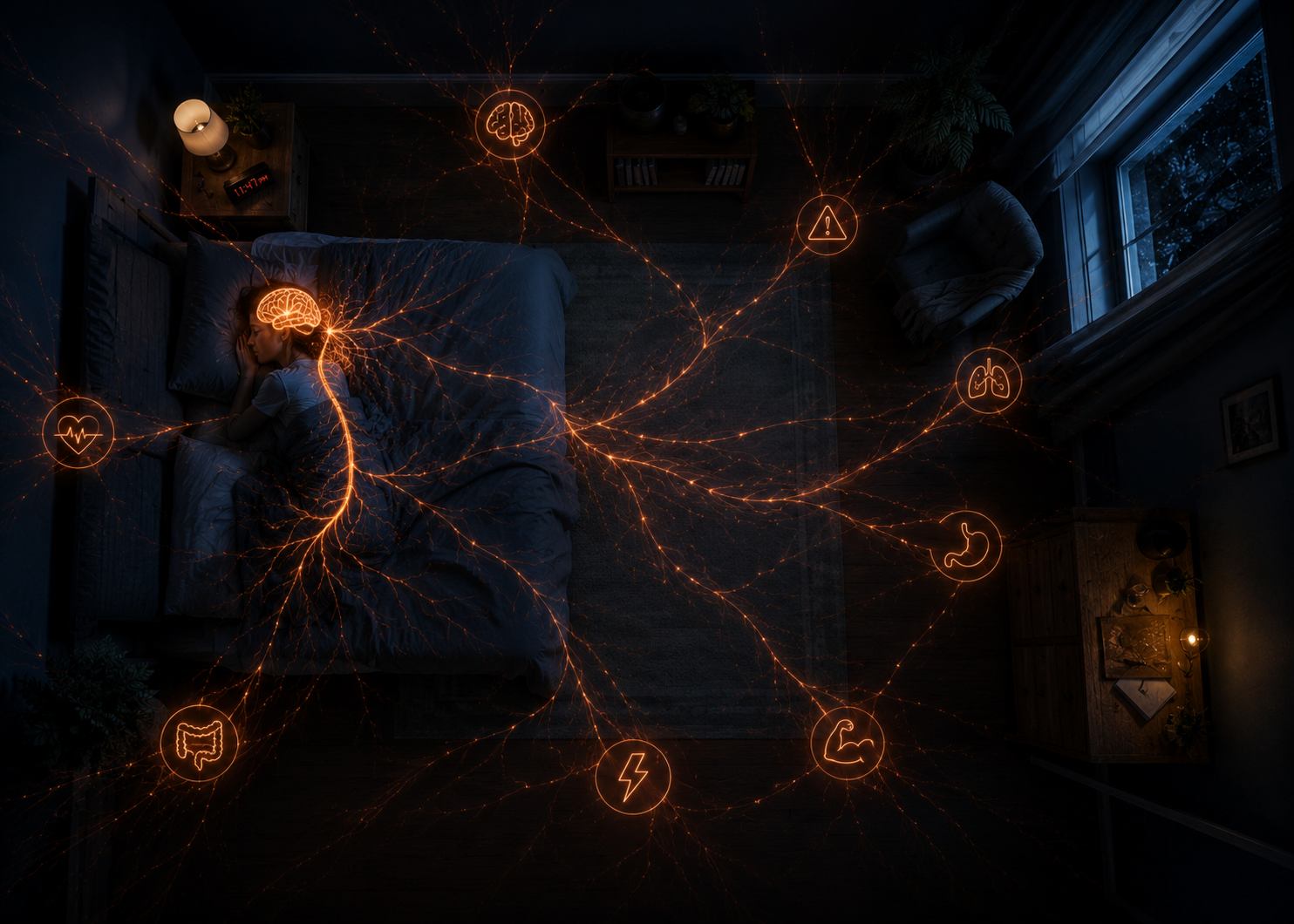
You finally lie down.
The room is quiet. The lights are off. Your body is tired.
And then suddenly—you notice it.
Your heart.
It feels louder. Faster. Stronger.
Almost like it came out of nowhere.
You weren’t even thinking about anything stressful.
But now your attention is locked onto it.
And the more you notice it, the more intense it feels.
That moment of calm quickly turns into concern.
“Why is this happening?”
“Is something wrong?”
“Why does my heart race when I lie down to sleep?”
This isn’t random—and it’s not actually your heart.
If this keeps happening at night, I created a simple guided reset you can use in the moment:
→ Free 5-Minute Emergency Sleep Reset
Table of Contents
This Is More Common Than You Think
This experience is incredibly common.
Especially at night.
During the day, your attention is pulled outward.
Work, conversations, movement—your brain is busy filtering everything.
At night, that changes.
The environment quiets down.
Your body becomes still.
And your awareness turns inward.
That’s when you start noticing things that were always there—but not noticeable before.
If your nervous system hasn’t fully settled, those sensations can feel stronger.
And sometimes, that shows up as your heart racing.
This is not dangerous.
It’s a pattern of awareness and activation.
What It Feels Like
People describe this in very similar ways.
- A pounding or forceful heartbeat
- A racing or speeding sensation
- Heightened awareness in the chest or throat
- A sudden shift from calm to alert
Sometimes it’s accompanied by other sensations like an adrenaline rush when falling asleep.
Or it may happen alongside waking up with anxiety at night.
In more intense moments, it can even feel similar to feeling like you’re dying when falling asleep.
Even though these experiences feel very physical, they are driven by your nervous system—not a problem with your heart.
These nighttime symptoms are often connected to broader sleep anxiety patterns.
For some people, this shows up as a racing heart.
For others, it feels like a sudden surge of adrenaline, a jolt right as they fall asleep, or even a moment where it feels like something is seriously wrong.
If you’ve experienced those patterns too, these can help you connect the dots:
- Why You Get an Adrenaline Rush Right As You Fall Asleep
- If You Jolt Awake the Moment You Fall Asleep
- Why You Feel Like You’re Dying When Falling Asleep
Why Your Heart Races When You Lie Down
When you lie down, two things happen at the same time.
- Your body becomes still.
- And your awareness increases.
This makes normal body sensations feel louder.
It’s like hearing a clock ticking when the room goes quiet.
The clock didn’t get louder.
The environment got quieter.
Your body works the same way.
If your nervous system is slightly activated, your heartbeat can feel stronger or faster.
Not because something changed dramatically.
But because you’re finally noticing it.
Why It Feels Worse at Night
Night amplifies everything.
- There’s less sound.
- Less movement.
- Less distraction.
Your brain naturally starts scanning inward.
And when it does, it picks up on sensations.
For some people, this same pattern shows up as waking up suddenly in the middle of the night with anxiety already activated.
If that’s happening to you, this explains why:
👉 Waking Up with Anxiety at Night
Those sensations feel bigger than they are.
And once your attention locks onto them, your nervous system can respond.
- That response creates more sensation.
- Which creates more awareness.
- Which creates more activation.
- And the cycle builds.
Once you understand this pattern, the next step is helping your body settle in the moment:
→ Free 5-Minute Emergency Sleep Reset
Why Trying to Calm It Makes It Worse
This is the part most people don’t expect.
The instinct is to fix it.
So you try to calm yourself down.
You monitor your breathing.
You check your pulse.
You search for answers.
But each of these keeps your attention locked on your body.
And that attention keeps your nervous system active.
The loop looks like this:
attention → fear → activation → more attention
The more you try to control it, the more your body stays alert.
In some cases, the body may even start to shake or feel restless as this loop builds.
You can read more about that here:
👉 Shaking at Night when Trying to Sleep
What Actually Helps
Relief doesn’t come from controlling your body.
It comes from allowing it to settle.
That means:
- Letting the sensation be there without reacting
- Reducing resistance instead of fighting it
- Gently shifting attention away from your heartbeat
- Giving your body space to return to calm on its own
Your nervous system already knows how to settle.
It just needs the right conditions.
A Simple Way to Calm Your Body at Night
If your heart starts racing when you lie down, this usually doesn’t change by trying harder.
Your body needs a different signal.
I created a short, guided reset you can use right when this happens to help your system settle naturally.
→ Start here: Free 5-Minute Emergency Sleep Reset
It only takes a few minutes, and for many people it’s the first time their body actually calms down at night.
If symptoms are severe, new, worsening, or you have concerns about your heart health, it’s always appropriate to speak with a licensed medical professional. This article is focused on common nervous system and anxiety-related patterns that many people experience at night.
FAQ
In most cases, no. What you’re experiencing is related to your nervous system and awareness, not a structural issue with your heart. The sensation feels real, but it’s usually not dangerous.
If you’ve never been evaluated or have concerns, it’s always reasonable to speak with a professional for peace of mind. But many people experiencing this have already been told their heart is healthy.
When you lie down, your body becomes still and your awareness increases. This makes sensations like your heartbeat more noticeable, which can trigger a response from your nervous system.
Yes. Anxiety can activate your nervous system, even subtly. At night, this activation becomes more noticeable and can feel like your heart is racing.
No. While it can feel intense and uncomfortable, this pattern is not dangerous. It’s a common response of the nervous system and can improve over time as your body learns to settle.
Add your first comment to this post