
Sleep, Stress & Anxiety Relief Stop Smoking Naturally Emotional Freedom Technique (Tapping) Energy Healing & Chakras Weight Management Mindset Manifesting & Abundance Cults & Spiritual Abuse Recovery

Benefits of Quitting Smoking Timeline: What Happens to Your Body After You Quit

Many smokers know that quitting is good for their health, but few realize how quickly the body begins repairing itself after the last cigarette.

Within minutes of quitting smoking, positive changes begin taking place throughout the body. Over the following days, weeks, months, and years, the risk of smoking-related diseases continues to decline while physical and mental health gradually improve.

Understanding the benefits of quitting smoking can provide powerful motivation during difficult moments. Every craving resisted and every smoke-free day allows the body another opportunity to heal.

Want the complete roadmap to becoming a non-smoker? Start with our Subconscious Quit Smoking Guide to learn how cravings, triggers, hypnosis, relapse prevention, and behavioral change work together to create lasting freedom from smoking.


Read More

Smoking Triggers: Why You Crave Cigarettes and How to Break the Habit

Many smokers assume that cigarettes are only about nicotine. While nicotine addiction plays an important role, it is often not the biggest reason people continue smoking.

Long after nicotine has left the body, certain situations, emotions, places, and routines can still create powerful cravings. These are known as smoking triggers.

Understanding your triggers is one of the most important steps toward becoming smoke-free. Once you recognize why cravings occur, you can begin breaking the automatic patterns that keep smoking in place.

Want the complete roadmap to becoming a non-smoker? Start with our Subconscious Quit Smoking Guide to learn how cravings, triggers, hypnosis, relapse prevention, and behavioral change work together to create lasting freedom from smoking.

Read More

Weight Gain After Quitting Smoking: Causes, Prevention, and What to Expect

Many smokers want to quit but hesitate because of one common fear: weight gain. Stories of people gaining 10, 20, or even 30 pounds after quitting cigarettes can make the idea of becoming smoke-free feel less appealing.

The reality is much more encouraging. While some people do gain weight after quitting smoking, many maintain their weight, and some even lose weight as they adopt healthier habits. More importantly, the health benefits of quitting smoking far outweigh the risks associated with modest weight gain.

Understanding why weight gain happens after quitting smoking can help you prepare for the transition, manage cravings more effectively, and stay focused on long-term success.

Want the complete roadmap to becoming a non-smoker? Start with our Subconscious Quit Smoking Guide to learn how cravings, triggers, hypnosis, relapse prevention, and behavioral change work together to create lasting freedom from smoking.

Read More

Nicotine Withdrawal Timeline: What to Expect When You Quit Smoking

Nicotine withdrawal is one of the biggest reasons smokers struggle to quit successfully. Many people know they want to stop smoking, but fear of cravings, anxiety, irritability, brain fog, and other withdrawal symptoms often keeps them trapped in the cycle of addiction.

If you’re wondering how long nicotine withdrawal lasts, the good news is that the most intense symptoms are temporary. While cravings and discomfort can feel overwhelming in the moment, they are actually signs that your body and brain are beginning to recover from nicotine dependence.

Understanding what to expect can make the quitting process far less intimidating. When you know which symptoms are normal, when they typically appear, and how long they usually last, you’re less likely to panic or mistake temporary withdrawal for permanent suffering.

In this guide, you’ll learn exactly what happens during nicotine withdrawal, which days tend to be the most challenging, how long cravings typically last, and practical strategies that can make the transition to a smoke-free life much easier.

Want the complete roadmap to becoming a non-smoker? Start with our Subconscious Quit Smoking Guide to learn how cravings, triggers, hypnosis, relapse prevention, and behavioral change work together to create lasting freedom from smoking.

Read More

Crown Chakra Block Symptoms: 9 Signs Your Crown Chakra Is Out of Alignment

What are crown chakra block symptoms? In chakra traditions, feeling spiritually disconnected, lacking a sense of purpose, or struggling to find inner peace may be interpreted as signs of crown chakra imbalance. These are spiritual interpretations, not medical diagnoses, and similar feelings can arise for many reasons.

In traditional chakra teachings, the Crown Chakra (Sahasrara) symbolizes spiritual connection, wisdom, purpose, and expanded awareness. Reflecting on these themes can provide a meaningful framework for exploring your beliefs and sense of connection.

When your Crown Chakra is balanced, you feel peaceful, connected, purposeful, and open to life’s deeper meaning. When it is blocked, life can begin to feel isolating, confusing, empty, or disconnected from purpose.

In this guide, you’ll learn the most common crown chakra block symptoms, what causes them, and how to begin restoring balance from the inside out.

Looking for the complete chakra healing roadmap? Visit the Chakra Healing Hub for guidance on blocked chakras, chakra balancing, chakra hypnosis, and energy healing.

Read More

Third Eye Chakra Block Symptoms: 9 Signs Your Third Eye Chakra Is Out of Alignment

What are third eye chakra block symptoms? In chakra traditions, overthinking, mental fog, indecision, and difficulty trusting your intuition are often interpreted as signs of third eye chakra imbalance. These experiences can arise for many reasons; chakra blockage is a spiritual perspective, not a medical diagnosis.

The Third Eye Chakra is the center of intuition, inner wisdom, perception, clarity, imagination, and spiritual awareness. It governs your ability to trust yourself, access insight, and see beyond surface appearances.

When your Third Eye Chakra is balanced, you feel intuitive, mentally clear, insightful, and connected to your inner guidance. When it is blocked, life can begin to feel confusing, uncertain, disconnected, or mentally overwhelming.

In this guide, you’ll learn the most common third eye chakra block symptoms, what causes them, and how to begin restoring balance from the inside out.

Looking for the complete chakra healing roadmap? Visit the Chakra Healing Hub for guidance on blocked chakras, chakra balancing, chakra hypnosis, and energy healing.

Read More

Throat Chakra Block Symptoms: 9 Signs Your Throat Chakra Is Out of Alignment

What are throat chakra block symptoms? In chakra traditions, difficulty speaking up, fear of conflict, people-pleasing, and feeling misunderstood are commonly associated with throat chakra imbalance. These patterns can have many explanations; chakra blockage is a spiritual interpretation, not a medical diagnosis.

The Throat Chakra is the center of communication, self-expression, authenticity, truth, and creative voice. It governs your ability to express yourself clearly, communicate honestly, and share your thoughts and feelings with confidence.

When your Throat Chakra is balanced, you feel comfortable speaking your truth, expressing your needs, and communicating openly. When it is blocked, life can begin to feel frustrating, silencing, lonely, or emotionally restrictive.

In this guide, you’ll learn the most common throat chakra block symptoms, what causes them, and how to begin restoring balance from the inside out.

Looking for the complete chakra healing roadmap? Visit the Chakra Healing Hub for guidance on blocked chakras, chakra balancing, chakra hypnosis, and energy healing.

Read More

Heart Chakra Block Symptoms: 9 Signs Your Heart Chakra Is Out of Alignment

What are heart chakra block symptoms? In chakra traditions, difficulty trusting others, emotional guardedness, grief, and trouble receiving affection are often associated with heart chakra imbalance. These feelings can have different causes; the chakra explanation is spiritual, not a medical diagnosis.

The Heart Chakra is the center of love, compassion, connection, forgiveness, emotional openness, and trust. It governs your ability to give and receive love, build healthy relationships, and experience deep emotional connection.

When your Heart Chakra is balanced, you feel connected, compassionate, open, and emotionally resilient. When it is blocked, life can begin to feel lonely, guarded, painful, or emotionally disconnected.

In this guide, you’ll learn the most common heart chakra block symptoms, what causes them, and how to begin restoring balance from the inside out.

Looking for the complete chakra healing roadmap? Visit the Chakra Healing Hub for guidance on blocked chakras, chakra balancing, chakra hypnosis, and energy healing.

Read More

Solar Plexus Chakra Block Symptoms: 9 Signs Your Solar Plexus Chakra Is Out of Alignment

What are solar plexus chakra block symptoms? In chakra traditions, persistent self-doubt, low confidence, people-pleasing, indecision, and difficulty setting boundaries are commonly interpreted as signs of solar plexus imbalance. These experiences have many possible explanations; chakra blockage is a spiritual framework, not a medical diagnosis.

In traditional chakra teachings, the Solar Plexus Chakra (Manipura) symbolizes personal power, confidence, self-worth, motivation, and action. Exploring these themes through reflection and guided practices may help you build self-trust, make decisions, and establish healthier boundaries.

When your Solar Plexus Chakra is balanced, you feel confident, capable, decisive, and empowered. When it is blocked, life can begin to feel frustrating, uncertain, overwhelming, or controlled by fear.

In this guide, you’ll learn the most common solar plexus chakra block symptoms, what causes them, and how to begin restoring balance from the inside out.

Looking for the complete chakra healing roadmap? Visit the Chakra Healing Hub for guidance on blocked chakras, chakra balancing, chakra hypnosis, and energy healing.

Read More

Sacral Chakra Block Symptoms: 9 Signs Your Sacral Chakra Is Out of Alignment

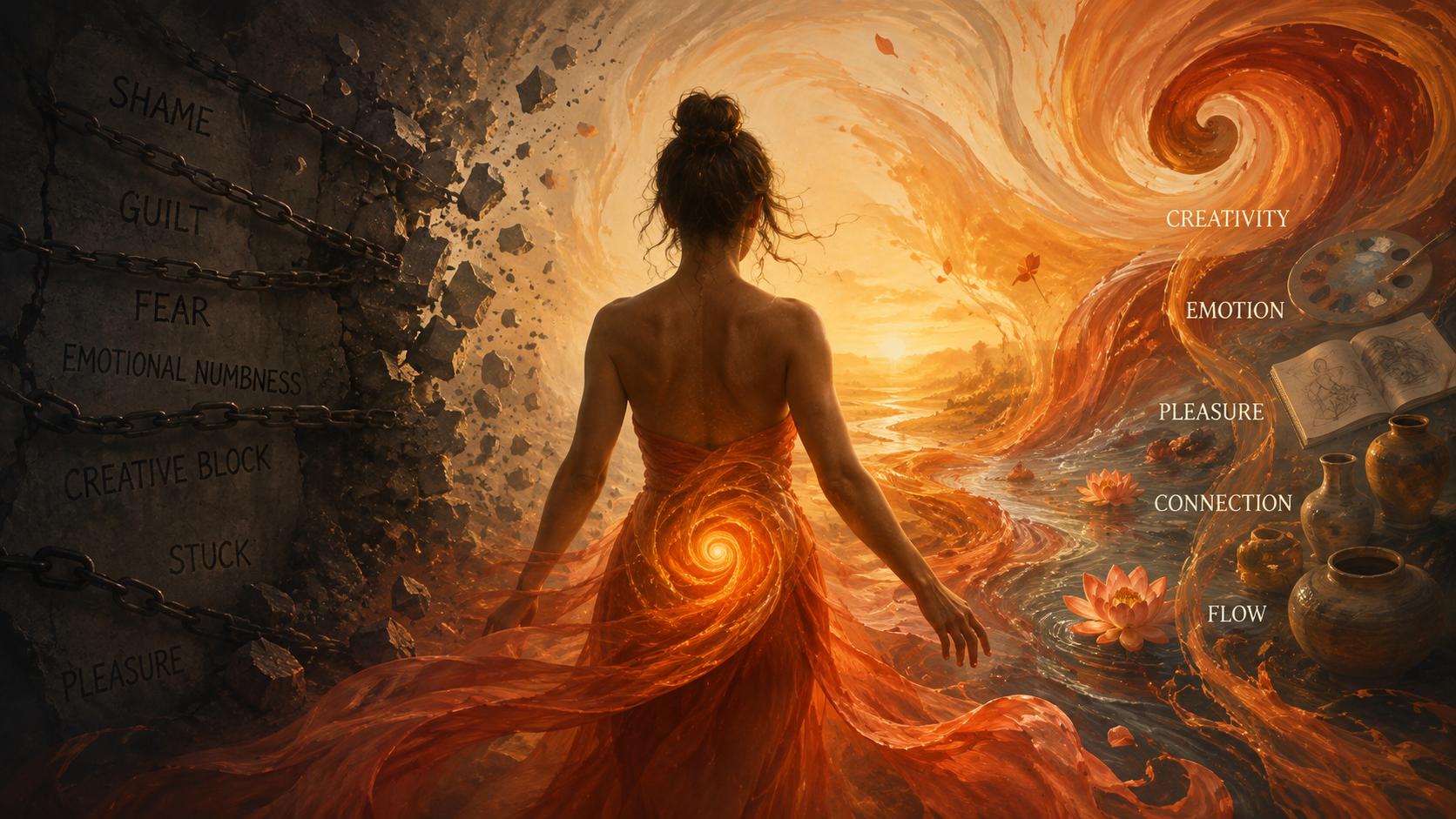
What are sacral chakra block symptoms? In chakra traditions, creative blocks, emotional disconnection, difficulty enjoying pleasure, and repeating relationship patterns are associated with sacral chakra imbalance. These feelings may have many causes, and chakra blockage is a spiritual framework rather than a clinical diagnosis.

The Sacral Chakra is the center of emotion, creativity, sensuality, pleasure, connection, and flow. It governs your ability to feel, receive, create, and experience joy.

When your Sacral Chakra is balanced, you feel emotionally alive, connected, inspired, and open to life. When it is blocked, life can begin to feel flat, heavy, disconnected, or emotionally overwhelming.

In this guide, you’ll learn the most common sacral chakra block symptoms, what causes them, and how to begin restoring balance from the inside out.

Looking for the complete chakra healing roadmap? Visit the Chakra Healing Hub for guidance on blocked chakras, chakra balancing, chakra hypnosis, and energy healing.

Read More