
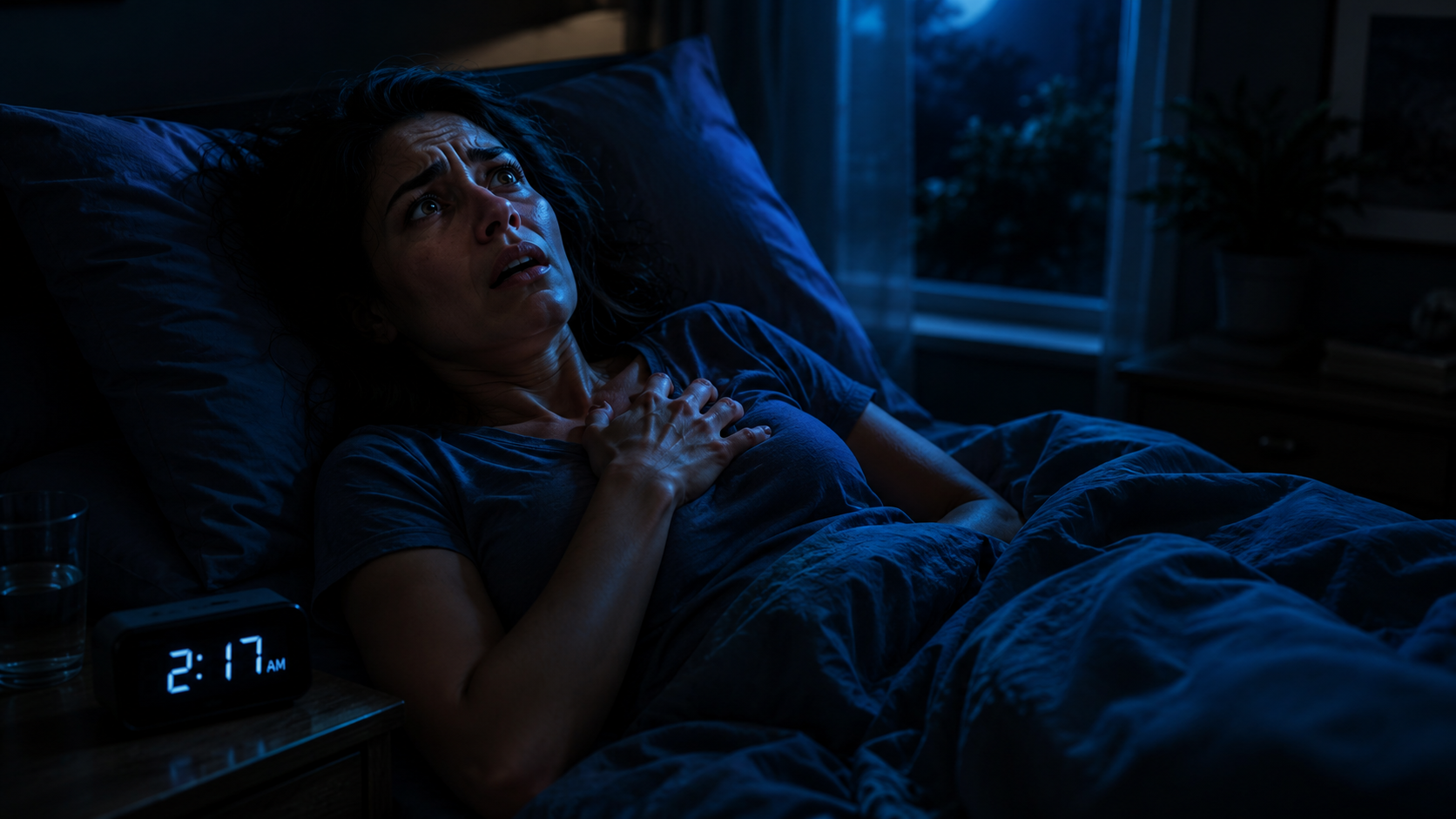
You’re lying in bed, finally ready to sleep.
Your body feels tired. Your eyes are heavy. The day is over.
And then—right as you begin to drift—something happens.
- Your chest tightens.
- Your heart starts pounding.
- Your breathing changes.
- A sudden wave of fear moves through your body.
It doesn’t feel like normal anxiety.
It feels intense.
Immediate.
Overwhelming.
And the thought comes quickly:
“Something is wrong.”
For many people, it goes even further:
“Why does it feel like I’m dying when I try to fall asleep?”
If you’ve experienced this, you’re not alone.
If this has happened to you at night, you know how intense it can feel—and how quickly your mind goes to worst-case scenarios.
In that moment, you don’t need more information—you need something that helps your body settle.
And more importantly—this experience, while frightening, is not dangerous.
I put together a short, free guided reset you can use at night when this hits:
👉 Get it here: Free 5-Minute Emergency Sleep Reset
Table of Contents
- This Experience Is Real — But It’s Not What It Feels Like
- What It Feels Like Physically
- Why This Happens: The Nervous System and Adrenaline
- Why It Feels Like You’re Dying
- The Connection to Sleep Anxiety Patterns
- Why It Happens at Night Specifically
- Why Trying to Control It Makes It Worse
- What Actually Helps
- A Gentle Next Step
- Frequently Asked Questions
- Related Sleep Anxiety Articles
This Experience Is Real — But It’s Not What It Feels Like
What you’re feeling in that moment is not your body failing.
It’s your body reacting.
This kind of nighttime panic is incredibly common, especially for people dealing with underlying stress, anxiety, or nervous system activation.
The intensity of the sensation can make it feel serious.
But intensity does not equal danger.
Your body is not shutting down.
It’s actually doing the opposite.
It’s activating.
And that activation is what creates the feeling that something is wrong.
Understanding this is helpful—but what actually changes things is how your body experiences these moments at night.
If you want a simple way to start shifting that response, I walk you through it here:
👉 Get it here: Free 5-Minute Emergency Sleep Reset
What It Feels Like Physically
People describe this experience in very similar ways.
Even if you’ve never talked to anyone about it, what you’re feeling has been felt by many others.
It can include:
- A sudden surge of adrenaline as you try to fall asleep
- A racing or pounding heart
- A feeling like your breathing is off or not automatic
- A tight or heavy sensation in your chest
- A sudden jolt of alertness
- A wave of fear that seems to come out of nowhere
Sometimes it feels like your body is trying to wake you up.
Other times it feels like something is going wrong internally.
This is why many people search for things like:
“why do I feel like I’m dying when I try to fall asleep”
Because the sensation feels that intense.
Why This Happens: The Nervous System and Adrenaline
Your nervous system is designed to protect you.
It constantly scans for anything that might be a threat.
When it detects something uncertain, it activates a response.
That response includes adrenaline.
Adrenaline increases your heart rate, sharpens your awareness, and prepares your body to act.
During the day, this can be useful.
At night, it can feel confusing.
When your body releases adrenaline as you’re falling asleep, it creates a sudden shift from calm to alert.
This is often experienced as an adrenaline surge when falling asleep.
The problem isn’t the adrenaline itself.
It’s the timing.
Your body is trying to sleep—but your nervous system is still on guard.
Why It Feels Like You’re Dying
This is the part that scares people the most.
The sensation doesn’t just feel uncomfortable.
It feels serious.
It feels like something is wrong on a deep level.
There are two main reasons for this.
1. Loss of Control
Falling asleep requires letting go of conscious control.
- Your breathing becomes automatic.
- Your awareness fades.
- Your body takes over.
For a nervous system that is used to staying alert, this can feel unsafe.
That loss of control can trigger a protective response.
And that response feels like panic.
2. Intense Body Sensations
Adrenaline changes how your body feels.
- Your heart beats stronger.
- Your chest feels different.
- Your breathing shifts.
Some people also notice strange or unfamiliar body sensations as they drift off to sleep.
When these sensations happen suddenly, your brain tries to interpret them.
And because they’re intense, your brain assumes they’re important.
This is what creates the feeling that something is seriously wrong.
But in reality, your body is just activated—not failing.
This is why the experience feels so convincing in the moment.
And it’s also why trying to think your way out of it rarely works.
If you want something you can follow in real-time when this hits at night, start here:
👉 Get it here: Free 5-Minute Emergency Sleep Reset
The Connection to Sleep Anxiety Patterns
What you’re experiencing is not a random event.
It’s part of a pattern.
This pattern is often referred to as sleep anxiety.
It can include multiple symptoms that all stem from the same underlying issue: a nervous system that stays alert at night.
These symptoms can include:
- Sudden panic when falling asleep
- Adrenaline surges
- Heart racing at night
- Jolting awake sensations
If you want to understand how these symptoms connect, you can explore sleep anxiety symptoms more deeply.
You may also recognize patterns similar to panic when falling asleep or sudden nighttime panic sensations.
These are all variations of the same nervous system response.
Why It Happens at Night Specifically
One of the most confusing parts of this experience is that it often doesn’t happen during the day.
You might feel completely normal while you’re awake.
But as soon as you try to sleep, the symptoms appear.
This happens because night changes your internal environment.
Less Distraction
During the day, your attention is outward. At night, it turns inward.
Increased Awareness
Your body sensations become more noticeable in silence.
Processing Mode
Your nervous system begins to process what was held down during the day.
This combination makes nighttime the perfect moment for these sensations to surface.
Why Trying to Control It Makes It Worse
When this happens, your instinct is to stop it.
- You try to control your breathing.
- You try to calm yourself down quickly.
- You try to “fix” what’s happening.
But control sends a signal to your nervous system:
“Something is wrong.”
And when something feels wrong, your body stays alert.
This creates a loop:
Sensation → fear → control → more activation
The harder you try to stop it, the more your system stays engaged.
This is why the experience can feel like it’s getting worse instead of better.
What Actually Helps
The solution is not to force calm.
The solution is to change how your body interprets the experience.
This begins with a different approach.
If you’d rather be guided through this instead of trying to remember steps in the moment, I created a short reset you can follow at night:
👉 Get it here: Free 5-Minute Emergency Sleep Reset
Allow the Sensation
Notice what’s happening without immediately reacting to it as danger.
Reduce Resistance
The less you fight it, the less your nervous system escalates.
Create Consistent Safety Signals
Calm, predictable routines help your body feel secure at night.
Let the Body Settle Naturally
Sleep happens when the system feels safe—not when it is forced.
These shifts may feel subtle, but they are powerful over time.
A Gentle Next Step
If your body keeps doing this at night, it’s not random—and it’s not permanent.
It’s a learned pattern.
And learned patterns can change.
I created a short, free guided reset specifically for moments like this—something you can use when your body won’t settle at night:
👉 Get it here: What To Do When You Feel a Panic Surge While Falling Asleep (5-Minute Reset)
This isn’t about forcing calm.
It’s about helping your body feel safe enough to let go.
Frequently Asked Questions
This sensation is usually caused by a sudden activation of the nervous system. The intensity of adrenaline and body sensations can make it feel serious, but it is typically a stress response rather than a dangerous condition.
No. While it feels intense, it is generally not dangerous. It is a temporary activation of the nervous system, not a sign that your body is failing.
Your heart may feel more noticeable at night because your environment is quiet and your attention turns inward. Combined with nervous system activation, this can make your heartbeat feel stronger.
This happens when your nervous system remains alert during sleep onset. The brain releases adrenaline if it perceives uncertainty, even if there is no real danger.
Yes. Anxiety increases nervous system sensitivity, which can make these sensations more likely during the transition into sleep.
Focus on calming the nervous system rather than controlling the sensations. Allowing the experience and reducing resistance can help the body gradually settle.
Your nervous system operates independently of conscious awareness. Even if you feel calm mentally, your body may still carry activation that becomes noticeable at night.
Yes. As your nervous system learns that nighttime is safe, these symptoms often decrease significantly over time.
Add your first comment to this post