
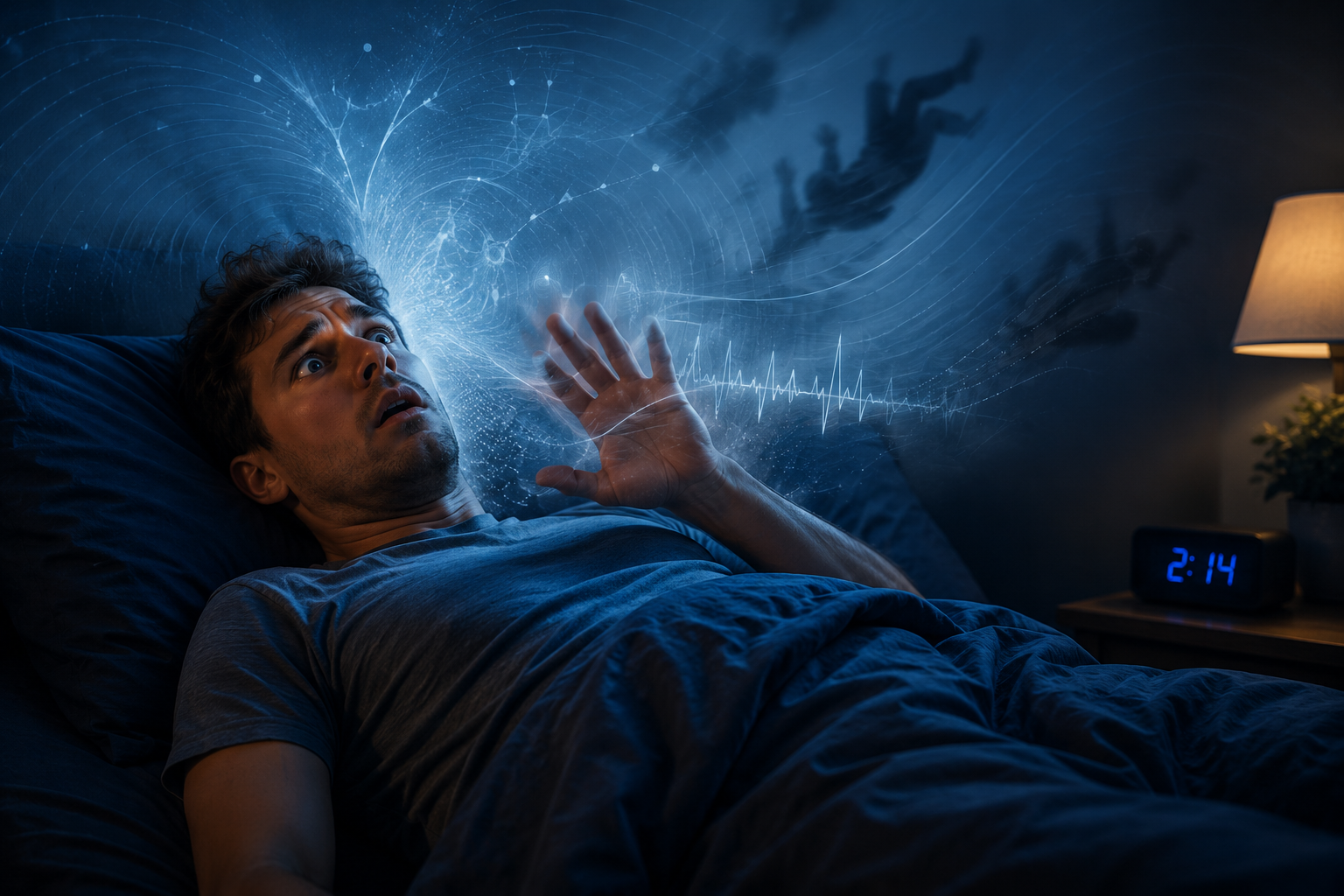
Why Anxiety Makes You Jolt Awake When Falling Asleep

You’re lying in bed, finally beginning to drift toward sleep.
Your breathing slows. Your body relaxes. The day begins to fade.

And then suddenly — your body jolts awake.

Your muscles twitch. Your heart may start racing. A wave of adrenaline rushes through your chest. Sometimes it feels like you were startled by something invisible. Other times it feels like your body suddenly panicked for no reason.

In that moment, many people sit up in bed wondering the same thing:

“Why do I jolt awake when falling asleep?”

The experience can feel frightening. It may even make you worry that something is wrong with your heart, brain, or nervous system.

Fortunately, this reaction is far more common than most people realize.

When anxiety and stress activate the nervous system, the body can remain partially alert even as you begin to fall asleep. That alertness can trigger sudden jolts, muscle contractions, or adrenaline surges during sleep onset.

In many cases, what feels like a mysterious or dangerous event is actually a very understandable stress response.

Understanding why anxiety makes you jolt awake when falling asleep can help reduce fear — and once the fear decreases, the body often begins to settle more easily at night.

If this is happening to you at night, you don’t need more information — you need something that helps your body settle in the moment.

I created a free 5-minute emergency sleep reset you can use when your body feels wired, panicky, or unable to shut off.

👉 Start the free reset here:
Free 5-Minute Emergency Sleep Reset
Read More

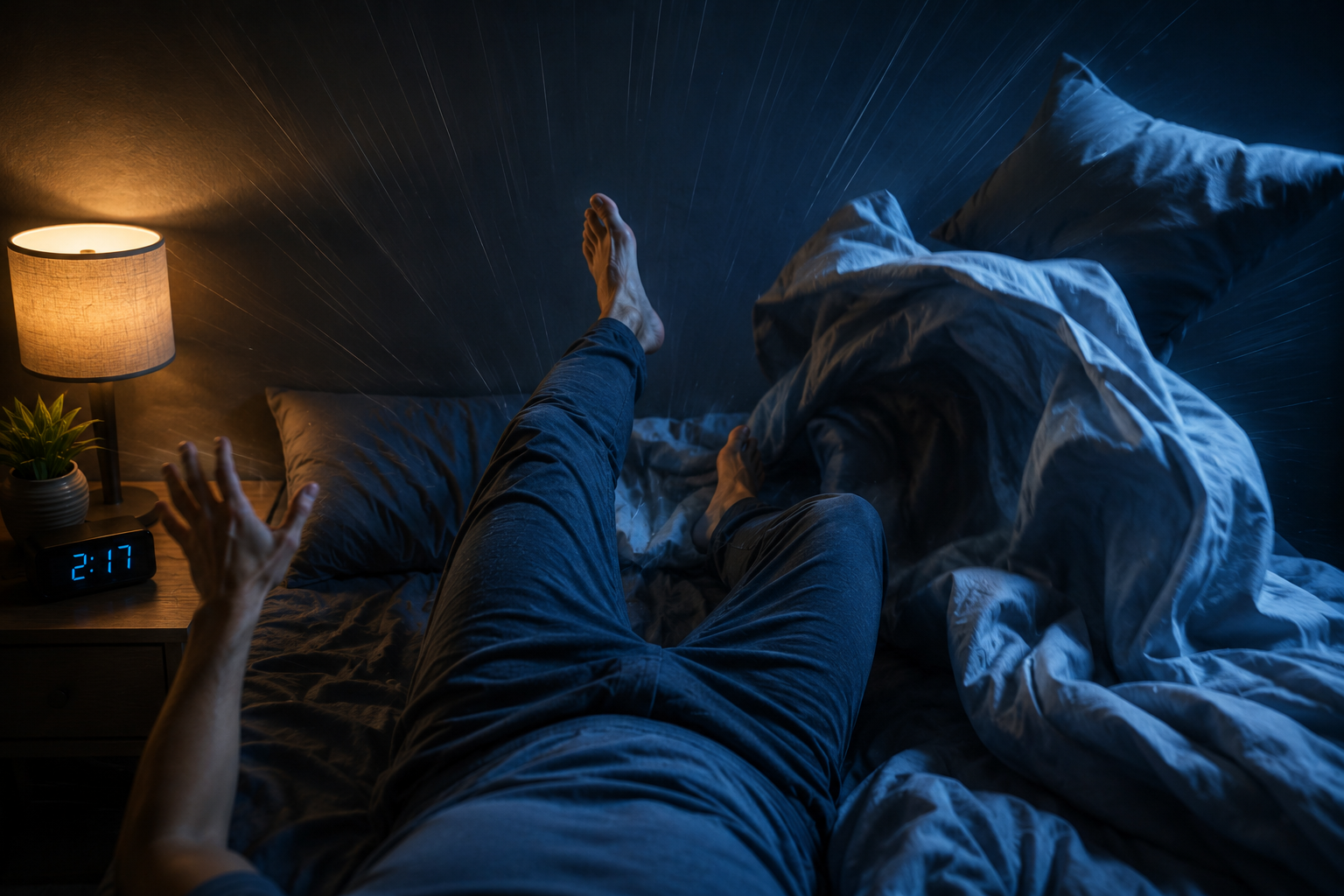
Hypnic Jerks When Falling Asleep: Why Your Body Suddenly Jolts Awake

You’re finally drifting toward sleep.
The room is quiet. Your body begins to relax. Your breathing slows.

And then suddenly — your body jolts.

Your leg kicks. Your arm twitches. Your whole body jerks as if you were startled awake. Sometimes it feels like you were falling. Other times it feels like an electric shock or sudden adrenaline surge.

Your heart may start racing. You might sit up in bed wondering what just happened.

Many people immediately fear something is wrong with their brain, heart, or nervous system.

The good news is that in the vast majority of cases, this experience has a very simple explanation.

These sudden movements are called hypnic jerks when falling asleep. They are extremely common and typically harmless. In fact, research suggests that up to 70% of people experience them at some point in their lives.

While hypnic jerks can feel frightening — especially if they happen repeatedly — they are usually just a sign that your nervous system is having trouble shifting from wakefulness into sleep.

Understanding what is happening inside your body can dramatically reduce the fear surrounding these sensations.

Hypnic jerks are sudden involuntary muscle contractions that occur while falling asleep. They commonly happen during the transition from wakefulness to sleep and may feel like a sudden jolt, falling sensation, or body twitch. Stress, anxiety, caffeine, and nervous system hyperarousal can increase their frequency.

If this is happening to you at night, you don’t need more information — you need something that helps your body settle in the moment.

I created a free 5-minute emergency sleep reset you can use when your body feels wired, panicky, or unable to shut off.

👉 Start the free reset here:
Free 5-Minute Emergency Sleep Reset
Read More

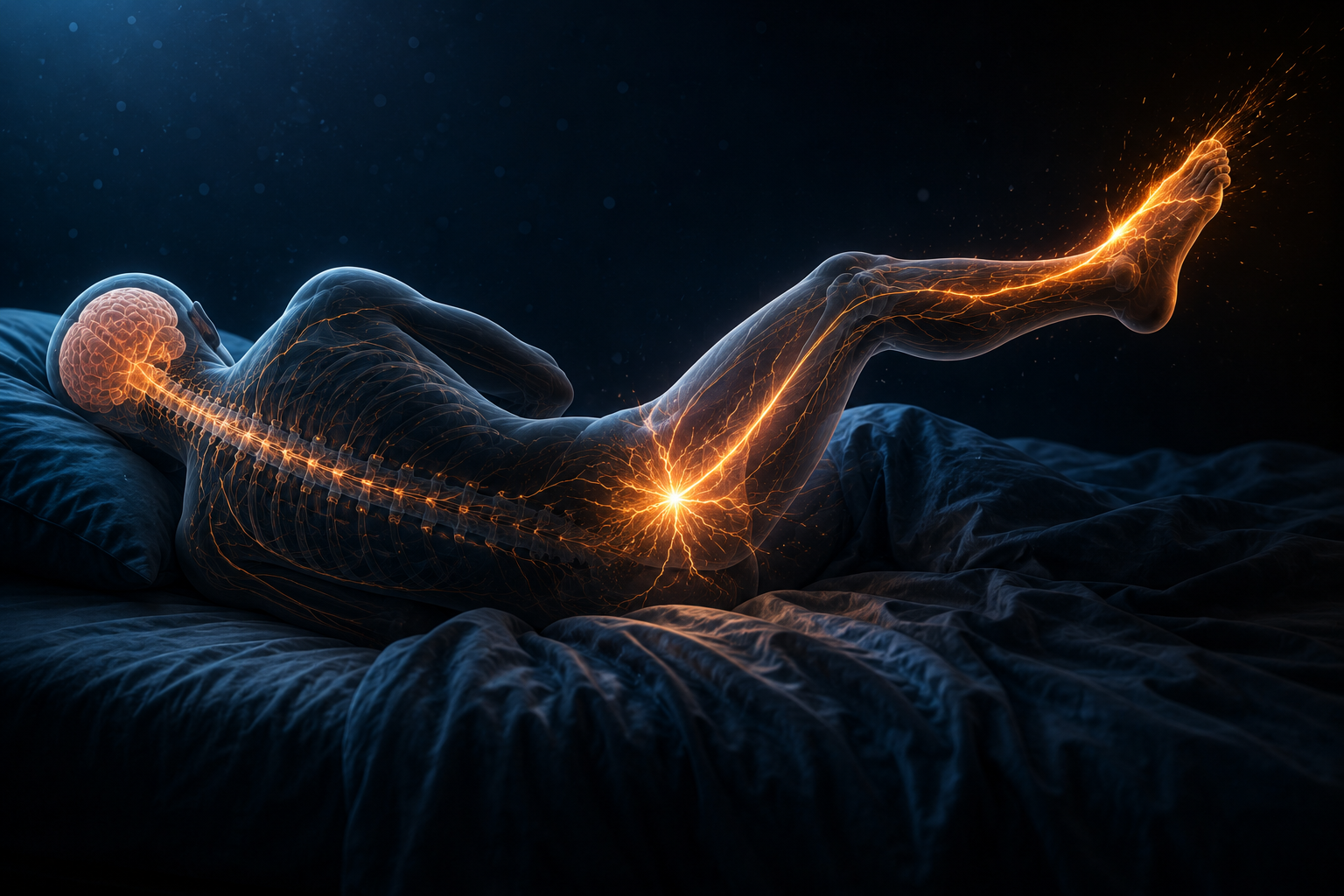
Body Jolts When Trying to Fall Asleep: Why It Happens (and How to Stop It)

You’re finally drifting off. Your body feels heavy, your thoughts begin to blur, and sleep seems only seconds away. Then suddenly — a sharp jolt. Your body twitches, your heart jumps, and you’re wide awake again.

If you experience body jolts when trying to fall asleep, you are not alone. This sensation can feel alarming, especially when it happens repeatedly. Many people immediately worry about seizures, neurological problems, or something “serious.” The good news is that in the vast majority of cases, sleep onset body jolts are a stress-response pattern — not a dangerous condition.

Let’s walk through what’s actually happening in your nervous system, why anxiety makes these jolts worse, and how your body can relearn how to settle.

Body jolts when trying to fall asleep are usually caused by hypnic jerks — sudden involuntary muscle contractions that occur during the transition from wakefulness to sleep. Stress, anxiety, hypervigilance, caffeine, and nervous system activation can make these jolts more frequent or intense.

If this is happening to you at night, you don’t need more information — you need something that helps your body settle in the moment.

I created a free 5-minute emergency sleep reset you can use when your body feels wired, panicky, or unable to shut off.

👉 Start the free reset here:
Free 5-Minute Emergency Sleep Reset
Read More

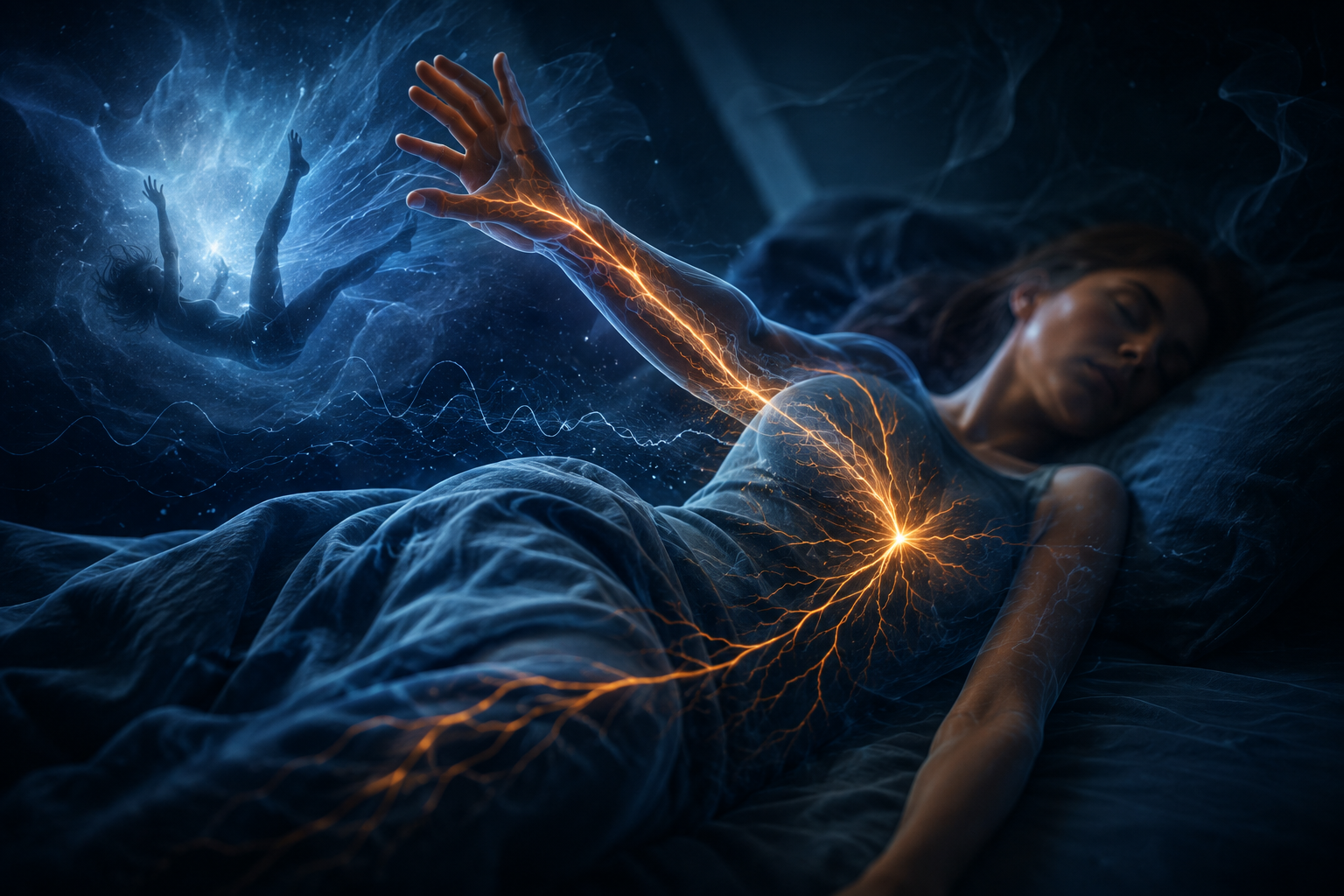
Anxiety Jolts When Falling Asleep: Causes, Symptoms & How to Stop Them

You’re drifting toward sleep. Your body feels heavy, your thoughts are slowing, and then—suddenly—your body jolts. It might feel like a sharp twitch, a drop, a rush of adrenaline, or a momentary wave of panic that snaps you fully awake.

If you experience anxiety jolts when falling asleep, it can be deeply unsettling. Many people describe an immediate fear that something is wrong with their body, especially when the jolt is paired with a racing heart or a sense of alarm. The timing alone—right at the edge of sleep—can make it feel especially threatening.

If this keeps happening, it does not mean something is wrong with your heart, brain, or nervous system — it’s a stress-response pattern.

If you struggle with nighttime anxiety symptoms, body jolts, adrenaline surges, or difficulty calming your nervous system before sleep, you can explore our full Sleep, Stress & Anxiety Relief resource center for additional guidance and support.

These jolts are common during periods of anxiety, heightened stress, or prolonged nervous-system activation. Understanding what’s happening can remove much of the fear and help your body begin to settle again.

Anxiety jolts when falling asleep are sudden physical startle sensations that occur during the transition into sleep. They are commonly linked to stress, nervous system hyperarousal, adrenaline surges, and heightened nighttime vigilance rather than dangerous medical conditions.

Read More

Body Jerks When Falling Asleep: Why It Happens & How to Calm It

Just as you’re drifting off, your body suddenly jerks.

It might feel like a sharp twitch in your legs, a full-body jolt, or a sudden startle that snaps you back awake. For many people, the reaction is instant fear — What was that? Is something wrong with my brain? Could this be a seizure or heart problem?

If you’re experiencing body jerks when falling asleep, you’re not alone — and you’re not imagining it. This is a common, well-documented sleep-onset experience that becomes especially noticeable during periods of stress, anxiety, or nervous system overload.

These body jerks do not mean something is wrong with your brain, heart, or nervous system. They are a stress-response pattern — not a medical emergency, and not a sign of neurological damage.

Understanding what’s happening can take a surprising amount of fear out of the experience.

If this is happening to you at night, you don’t need more information — you need something that helps your body settle in the moment.

I created a free 5-minute emergency sleep reset you can use when your body feels wired, panicky, or unable to shut off.

👉 Start the free reset here:
Free 5-Minute Emergency Sleep Reset

Body jerks at sleep onset are often part of a broader sleep anxiety pattern, especially when they happen with adrenaline, panic, heart racing, or fear of falling asleep.

If this keeps happening at night, you may want to start with the main guide here: sleep anxiety help.

Read More

Why Adrenaline Rushes Happen When You’re Trying to Fall Asleep

Many people experience a sudden adrenaline rush when falling asleep. Just as the body begins to relax, the nervous system may suddenly release adrenaline, causing a racing heart, a surge of alertness, or the feeling that sleep has been interrupted at the last moment.

While this can feel frightening, it is actually a common nervous system response associated with sleep anxiety and nighttime hyperarousal. Understanding why this happens can help you calm the body and allow sleep to return more naturally.

If this is happening to you at night, you don’t need more information — you need something that helps your body settle in the moment.

I created a free 5-minute emergency sleep reset you can use when your body feels wired, panicky, or unable to shut off.

👉 Start the free reset here:
Free 5-Minute Emergency Sleep Reset

Read More

Why Anxiety Jolts You Awake Just as You’re Falling Asleep

If you’ve ever felt your body suddenly jolt, jerk, or snap you awake just as you were drifting off, you’re not alone. Many people describe it as a sudden shock of alertness, a rush of adrenaline, or the feeling that their body “misfired” at the edge of sleep.

It can be frightening, especially when it happens repeatedly. The mind often jumps to worst-case explanations, wondering if something is wrong with the heart, brain, or nervous system.

If this keeps happening, it does not mean something is wrong with your heart, brain, or nervous system. What you’re experiencing is a stress-response pattern — one that commonly shows up at sleep onset and feels far more alarming than it actually is.

This experience is often referred to as jolting awake from sleep anxiety, and while it feels intense in the moment, it is a well-recognized and reversible nervous system response.

If you’re dealing with multiple nighttime anxiety symptoms, start here:

👉 Sleep Anxiety Help: Why Your Body Panics at Night (And How to Stop It)

If this is happening to you at night, you don’t need more information — you need something that helps your body settle in the moment.

I created a free 5-minute emergency sleep reset you can use when your body feels wired, panicky, or unable to shut off.

👉 Start the free reset here:
Free 5-Minute Emergency Sleep Reset

If this happens repeatedly, it may be part of a broader sleep anxiety pattern. You can start with the main guide here:

👉 Sleep Anxiety Help: Calming the Nervous System at Night

Read More

Fear of Falling Asleep Anxiety: Why Your Body Panics at Bedtime

If you live with fear of falling asleep anxiety, nighttime can feel like a quiet trap. You may be exhausted all day, even longing for sleep — yet the moment you begin to drift off, fear appears. Your body might jolt, your heart may race, or a surge of panic seems to come from nowhere.

This experience can be deeply confusing and frightening. Many people think, “Why am I afraid of the very thing I need?” or “What’s wrong with me?”

Nothing is wrong with you.

Fear of falling asleep anxiety is not a weakness, a disorder, or a failure to relax. It is a protective nervous system response — one that can be understood, softened, and eventually reversed.

This is one part of a broader sleep anxiety pattern. If you want the full overview, you can start with my main guide to sleep anxiety help.

If this is happening to you at night, you don’t need more information — you need something that helps your body settle in the moment.

I created a free 5-minute emergency sleep reset you can use when your body feels wired, panicky, or unable to shut off.

👉 Start the free reset here:
Free 5-Minute Emergency Sleep Reset

Read More

Fear of Losing Control While Falling Asleep: Why It Happens and How Safety Can Return

If you experience a fear of losing control while falling asleep, nights can feel quietly terrifying in a way that’s hard to explain. You may feel fine during the day — capable, grounded, even confident. But as bedtime approaches, something shifts.

As your body begins to relax, a wave of fear can rise. Thoughts like What if I pass out? What if I stop breathing? What if I can’t monitor myself anymore? may appear, or the fear may come without words at all — just a powerful sense that letting go is unsafe.

This fear can make you feel trapped between exhaustion and vigilance. You want sleep, yet the moment sleep begins to take you, your system pulls you back.

It’s important to say this clearly: fear of losing control at sleep onset is not a sign that something is wrong with you. It is a protective nervous system pattern — and protective patterns can change.

This experience is part of a broader pattern of nighttime nervous system activation. If you want a full overview of causes, symptoms, and recovery approaches, start with my main guide on sleep anxiety help.

If this is happening to you at night, you don’t need more information — you need something that helps your body settle in the moment.

I created a free 5-minute emergency sleep reset you can use when your body feels wired, panicky, or unable to shut off.

👉 Start the free reset here:
Free 5-Minute Emergency Sleep Reset

Read More

Panic Attacks When Trying to Sleep: Why They Happen and How the Body Can Learn Safety Again

If you experience panic attacks when trying to sleep, nights can feel overwhelming in a way that’s hard to explain to anyone who hasn’t lived it. You may feel relatively okay during the day, even confident that you’ll sleep once your head hits the pillow. And then, just as your body begins to drift, a sudden wave of panic rises.

Your heart may race. Your breathing may feel strange or overly noticeable. You might feel dizzy, hot, shaky, or flooded with adrenaline. Sometimes the fear isn’t attached to a clear thought at all — just a powerful sense that something is wrong and you need to get away.

This can make bedtime feel dangerous. And once that association forms, fear of panic at night can begin to build long before you even lie down.

What’s important to know — especially if you’re reading this late at night — is that panic attacks when trying to sleep are not a sign that your body is broken. They are a learned nervous system response, and learned responses can change.

Panic attacks during sleep onset are often connected to broader patterns of nighttime anxiety, hyperarousal, and nervous system sensitization. If you want a full overview of symptoms, causes, and recovery approaches, start with my complete sleep anxiety help guide.

If this is happening to you at night, you don’t need more information — you need something that helps your body settle in the moment.

I created a free 5-minute emergency sleep reset you can use when your body feels wired, panicky, or unable to shut off.

👉 Start the free reset here:
Free 5-Minute Emergency Sleep Reset

Read More