
Why You Sabotage Weight Loss at Night (and How to Retrain Your Subconscious)

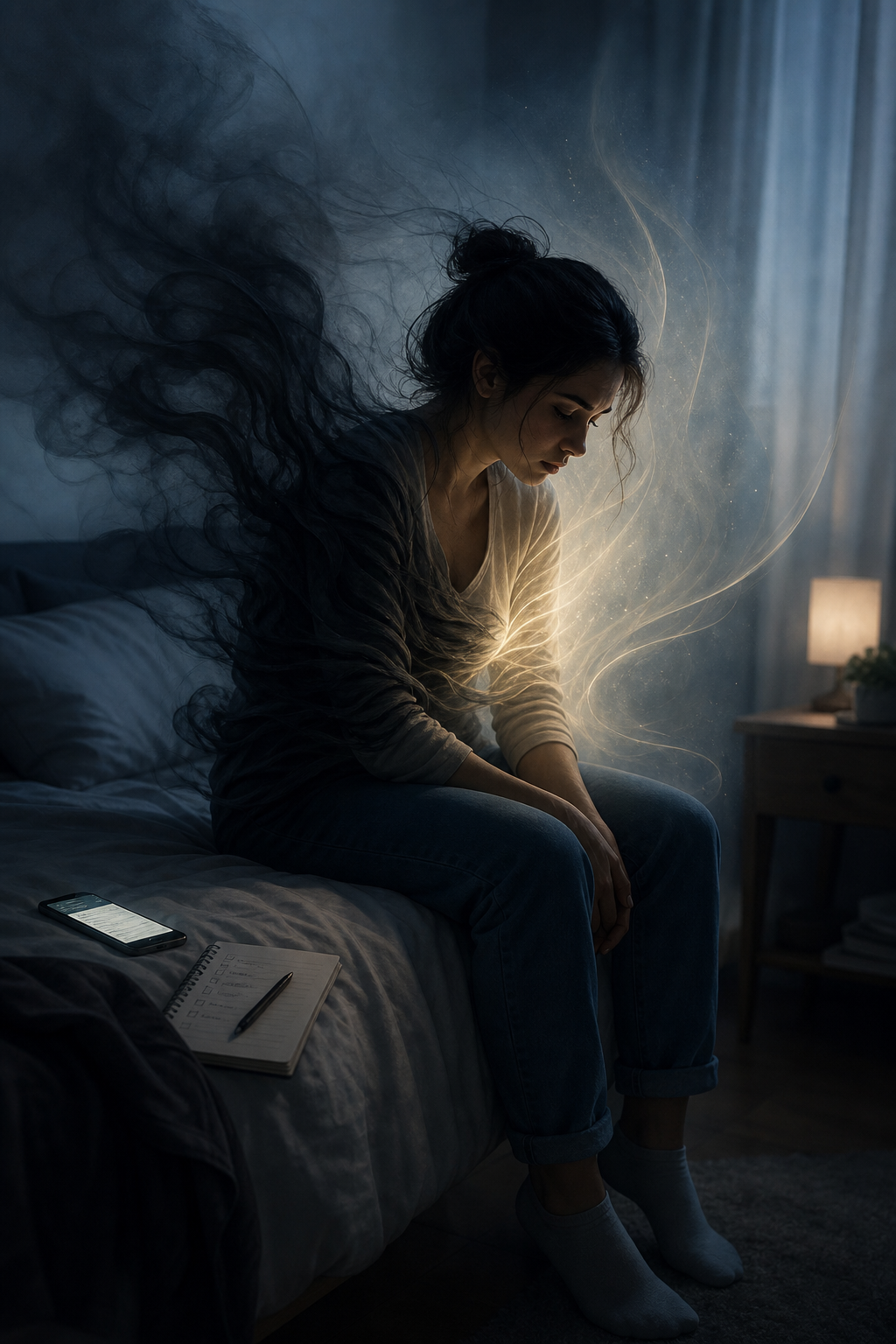
Woman struggling with food choices, shown with a glowing brain and heart to suggest a mental health and eating connection

All day, you do “everything right.” You watch what you eat. You make good choices. Maybe you even skip things you want. By late afternoon, you’re proud of yourself. “Today,” you think, “I’m finally on track.”

And then the evening comes.

You’re tired. Your brain feels full. You finally sit down, and the house gets quiet. At first, you just want a little something. A snack. A treat. A break. You tell yourself it’s no big deal.

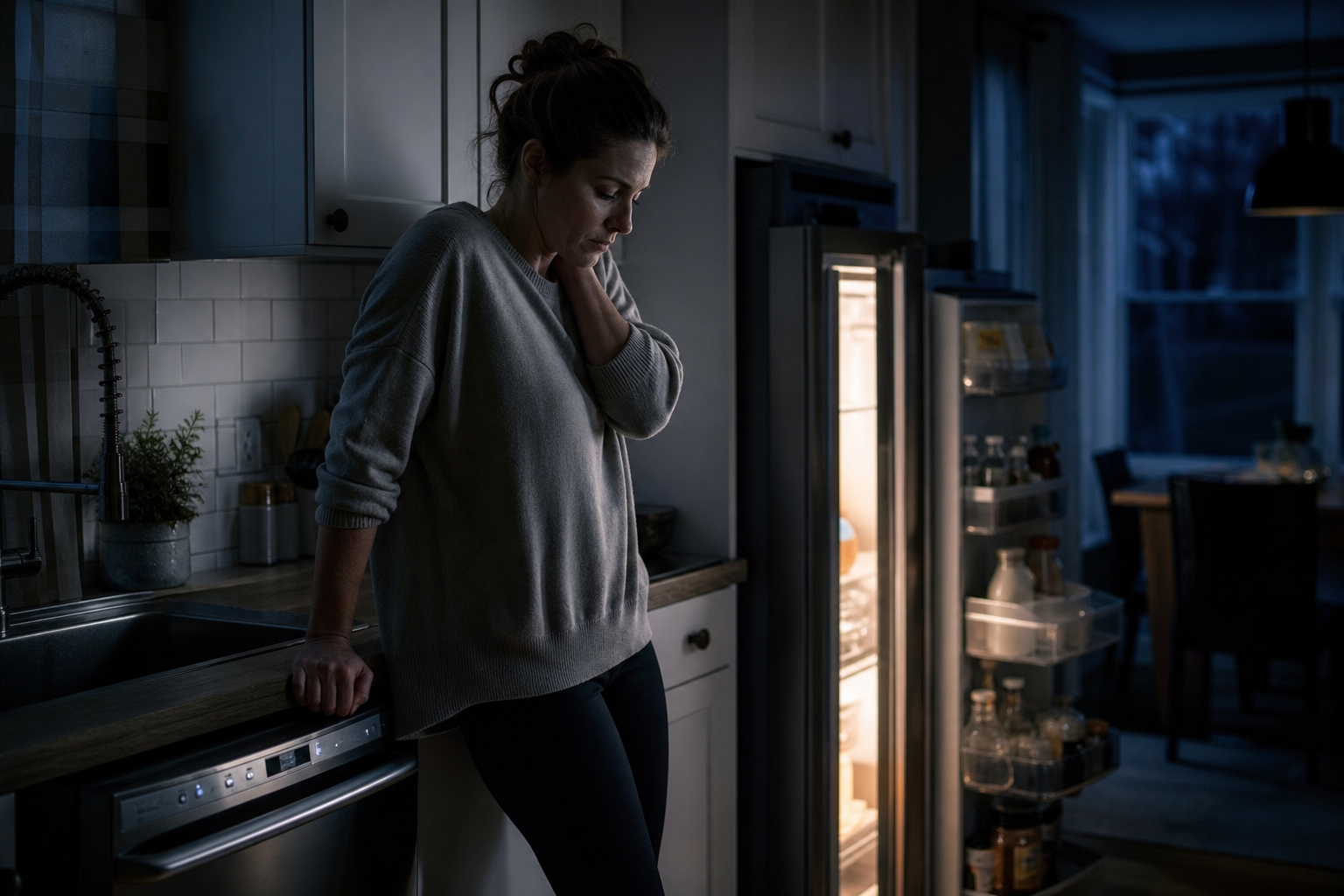
Then suddenly, you’re standing in front of the fridge… or over the sink… or at the pantry again… and it hits you:

“What am I doing? I’m ruining it. Again.”

You promise yourself you’ll start over tomorrow. But this isn’t the first “tomorrow.” It’s the latest in a long chain. And each time it happens, a little part of you starts to believe a painful story:

“I just can’t stick to it. Something must be wrong with me.”

If you eat well during the day and sabotage your weight loss at night, this article is for you. Not to shame you. Not to hand you another diet. But to show you what’s really happening in your nervous system, subconscious mind, and energy field when you lose control after dark — and how to retrain your system to make different choices without fighting yourself.

New to subconscious weight loss? Start with the complete cornerstone guide: Subconscious Weight Loss: The Complete Guide to Releasing Weight from the Inside Out.

Read More

Why Your Body Jerks Awake as You Fall Asleep

You’re finally drifting. Your muscles soften, the edges of the day blur, and your thoughts start to lose their sharpness. Just as you begin to slip into sleep—your whole body jerks.

Your leg kicks out, your arm jumps, or your entire body flinches like you’ve been startled. You snap back into full awareness with your heart pounding, breath shallow, and this familiar thought: “What was that?”

Maybe you’ve laughed it off in passing, but when it keeps happening—especially on nights when you’re already exhausted—that jolt can feel less like a quirk and more like a sign that something is wrong.

If your body jerks awake as you fall asleep, you’re not alone. And more importantly: you’re not broken. There are real, understandable reasons this happens, woven through your nervous system, subconscious, and energy field.

Start Here If Your Body Jerks Awake at Night

If your body jolts awake the moment you begin falling asleep, your nervous system may still be stuck in a state of stress, vigilance, or sleep anxiety.

This free guided reset can help calm the activation loop before bed.

Click here to try the free 5-Minute Emergency Sleep Reset.

Read More

Why You Wake Up With a Racing Heart at Night

You jolt awake in the dark. Your heart is pounding so hard it feels like it might burst through your chest. For a moment, you don’t know where you are. The room is quiet. There’s no noise, no danger, no obvious reason. And yet, your body feels like an alarm has been pulled.

You check the clock: 2:43 AM. Or 3:07 AM. Or some other hour when the rest of the world seems to be sleeping peacefully.

Part of you is terrified—“Is something wrong with me?” Another part of you is exhausted and frustrated—“Why is this happening again?” You might already know that anxiety tends to intensify at night, but this feels different. This is in your body. This is your heart.

For many people, waking up with a racing heart is one of the more distressing sleep anxiety symptoms. If this pattern keeps repeating, it can help to understand the larger nervous-system cycle behind nighttime anxiety through this guide to sleep anxiety help.

Read More

Why You Wake Up With Anxiety in the Middle of the Night

You jolt awake in the dark. Your heart is pounding, your chest feels tight, and there is a familiar sense of dread that doesn’t quite have words. The room is quiet. Nothing is actually happening. And yet inside, it feels like an alarm is blaring.

You glance at the clock.

3:02 AM. Again.

For many people, waking up with anxiety in the middle of the night is part of a larger pattern of sleep anxiety symptoms. Understanding the nervous-system cycle behind these experiences can help them feel less frightening and more workable over time.

If nighttime anxiety has become recurring, you may also want to explore this broader guide to sleep anxiety help.

Important: Anxiety symptoms at night can feel extremely physical. If you experience chest pain, fainting, severe shortness of breath, or new concerning symptoms, seek medical evaluation promptly. Once medical causes have been ruled out, nervous-system activation and sleep anxiety patterns may be important contributors to explore.

Read More

Why You Can’t Relax Before Bed (Even When You’re Exhausted)

You know the feeling. The day is finally done. You’re exhausted, your body aches for sleep, and your mind wants rest—but the moment you finally slow down, something inside refuses to settle.

Instead of relaxing, your chest tightens. Your thoughts stay alert. Your nervous system feels like it’s still waiting for something, even though the day is over.

For many people, this experience overlaps with broader sleep anxiety symptoms like racing thoughts, nighttime hypervigilance, emotional tension, or feeling physically tired but mentally unable to rest.

If this pattern keeps happening night after night, you’re not failing at relaxation. Your body may still be carrying stress, emotional overload, subconscious activation, or nervous-system dysregulation into the nighttime hours.

This article explores why relaxing before bed can feel impossible—even when you’re exhausted—and what actually helps your system begin to feel safe enough to rest again. For a broader overview of nighttime anxiety patterns and nervous-system-based support, visit Sleep Anxiety Help.

Read More

Why You Feel On Edge When Trying To Fall Asleep

You’re exhausted. The day is finally over. The lights are off, the house is quiet, and on paper this should be the most peaceful part of your day.

And yet, as you lie down, something inside you tightens.

You’re not relaxing. You’re bracing.

For many people, this feeling is one of the earliest sleep anxiety symptoms. It can show up as tension, hyper-awareness, restlessness, a sense of danger, or the feeling that your body does not fully believe it is safe to let go.

If this keeps happening, it may be part of a broader sleep anxiety pattern where your nervous system stays activated at bedtime even when your mind wants rest.

Free 5-Minute Emergency Sleep Reset

If you feel tense, wired, or on edge when trying to fall asleep, this free guided reset may help your nervous system begin settling before bed.

Access the Free Sleep Reset Here

Read More

Why Your Mind Races Through Life Choices at Night — And What You Can Do About It

When the world goes quiet… your mind gets loud.

The day ends. The distractions disappear. Your head hits the pillow — and suddenly your brain starts replaying every decision, every regret, every “what if?” you’ve ever carried.

You second-guess conversations. Re-evaluate life choices. Imagine worst-case futures. Revisit old mistakes. And no matter how exhausted you are, your nervous system refuses to settle.

For many people, this is part of a larger pattern of sleep anxiety — where nighttime becomes the only moment unresolved stress, emotional backlog, and subconscious fear finally have room to surface.

These spirals can overlap with many common sleep anxiety symptoms, including racing thoughts, chest tension, emotional flooding, hypervigilance, and feeling mentally trapped at bedtime.

This article will help you understand why nighttime overthinking happens — and how to begin interrupting the cycle so your mind and body can finally feel safe enough to rest.

Free 5-Minute Emergency Sleep Reset

If your mind spirals through life decisions the moment you try to sleep, this free guided reset may help calm the nervous system and interrupt nighttime overthinking.

Access the Free Sleep Reset Here

Read More

Why Loneliness Feels Worse at Night (And What Your Heart Is Really Asking For)

During the day, you can usually keep moving. There are tasks, messages, people, noise, and responsibilities. Even if you feel a little disconnected, you can stay busy enough to not fully notice it.

But at night, when the world slows down and the house gets quiet, something inside you changes.

The silence gets loud. The empty spaces feel bigger. You feel a weight in your chest that’s hard to name.

It’s more than “being alone.” It’s a deeper ache — a feeling that somehow you’re on your own in a way that doesn’t feel safe, held, or connected. And that’s when the thought creeps in:

“Why does my loneliness hit so much harder at night?”

If that’s you, there is nothing wrong with you. There are clear emotional, nervous-system, subconscious, and energetic reasons why loneliness intensifies at night — and once you understand them, you can start to soften the pattern.

For many people, nighttime loneliness also overlaps with sleep anxiety. The feeling of being emotionally alone can activate the nervous system, increase nighttime hypervigilance, and make it much harder to fall asleep peacefully.

If loneliness tends to arrive alongside racing thoughts, tension, dread, or difficulty sleeping, you may also recognize several common sleep anxiety symptoms.

Free 5-Minute Emergency Sleep Reset

If loneliness feels strongest when your head hits the pillow, this guided audio can help calm the nervous system and create a greater sense of safety before sleep.

Get The Free Sleep Reset

Read More

Why You Feel Like Something Is Wrong With You at Night (And What Your System Is Trying to Tell You)

It’s a quiet moment. The day is done. The noise drops. The world slows down.

And that’s when it hits you — a tightening in your chest, a buzzing under your skin, an uneasiness you can’t explain, a whisper in your mind that says:

“Something is wrong with me… especially at night.”

You don’t feel this way at noon. You don’t feel it when you’re busy, distracted, or surrounded by people. But when the lights dim, when your body tries to wind down, when your mind has no more tasks to chase… that’s when the feeling rises.

It’s not random. It’s not weakness. It’s not “just anxiety.” And it is absolutely not you “losing it.”

There are specific emotional, nervous-system, subconscious, and energetic reasons this pattern happens — and once you understand them, you’ll realize:

There is nothing wrong with you. There is something happening inside you. And it can be changed.

For many people, this nighttime feeling is closely related to sleep anxiety. It may not feel like anxiety in the traditional sense. Instead, it feels like dread, uneasiness, hypervigilance, or a persistent feeling that something is wrong.

These experiences are among the most common sleep anxiety symptoms people report before bed.

Free 5-Minute Emergency Sleep Reset

If your mind tells you something is wrong every night, this guided audio can help calm your nervous system and create a greater sense of safety before sleep.

Get The Free Sleep Reset

Read More

Why You Feel Emotionally Unsafe at Night (And What Your System Is Trying to Tell You)

During the day, you can usually hold it together. You show up, function, answer messages, handle responsibilities. But when night comes… something shifts.

The house gets quiet, the light changes, and instead of feeling relief, you feel exposed. Emotionally raw. On edge. Your body won’t relax. Your thoughts start scanning for danger, even when nothing is happening.

It’s not just “trouble sleeping.” It feels deeper than that. It feels like your system doesn’t trust the night. Almost as if you don’t feel emotionally safe being alone with yourself in the dark.

If that resonates, this isn’t you being dramatic, broken, or “too sensitive.” There are specific reasons why you feel emotionally unsafe at night — and once you understand them, you can begin to change them.

If you’re trying to understand the bigger picture behind these nighttime experiences, start with our guide to sleep anxiety symptoms, which explains why emotional overwhelm, racing thoughts, body buzzing, and nighttime dread often show up together.

Read More