
EFT Tapping Points Chart | Step-by-Step Guide for Beginners

Facial massage steps shown on a woman, with numbered insets demonstrating where to apply pressure on the face and neck

If you’re new to tapping, one of the first questions you’ll have is: “Where exactly do I tap?”

That’s where an EFT tapping points chart comes in.

EFT (Emotional Freedom Technique), often simply called tapping, uses your fingertips to gently stimulate specific points on the body while you focus on a feeling, thought, or memory. These points are drawn from acupuncture and acupressure and are located along the body’s meridians.

In this beginner-friendly guide, you’ll learn all the tapping points, the order to use them in, and how to combine them into a simple routine for stress relief and emotional balance.

If you’re completely new to Emotional Freedom Technique, visit our Complete EFT Tapping Resource Hub where you’ll find beginner tutorials, guided sessions, research articles, and practical EFT exercises.


Read More

What Is EFT Tapping? The Complete Beginner’s Guide to Emotional Freedom Technique

Woman meditating with eyes closed, touching her forehead and chest on a yoga mat

If you’ve ever asked yourself, “What is EFT tapping?” — you’re in the right place. EFT (Emotional Freedom Technique), often simply called tapping, is a mind-body practice that combines gentle acupressure with focused awareness to help release stress, anxiety, and emotional tension.

It’s simple, effective, and can be learned by anyone. In this beginner’s guide, we’ll explore what EFT tapping is, how it works, and why so many people around the world are using it as a natural way to reset their nervous system.

For the full EFT overview, visit the main EFT tapping hub, where you’ll find the complete guide, tapping points, research, anxiety support, stress relief techniques, and free beginner resources.

Read More

Healing After Quitting Smoking: What Happens to Your Mind and Body

Woman breathing deeply by a window, with a glowing lungs graphic over her chest

Quitting smoking is a massive victory—but it’s also just the beginning. Once the last cigarette is behind you, your body and mind begin a powerful process of renewal. Many people expect cravings to be the hardest part, but the real journey is healing after quitting smoking: restoring your lungs, balancing your emotions, and creating a new identity that lasts.

Healing is easier when you understand what’s happening inside your mind and body.

For a complete roadmap to quitting smoking through subconscious transformation, start here:

👉 Subconscious Quit Smoking: The Complete Guide

Read More

7 Subtle Signs Your Chakras Are Blocked (And How to Reopen Them Without Meditation)

Chakra Block Symptoms

You’ve probably heard about chakras — the 7 energy centers that influence everything from your emotions to your energy levels, focus, and relationships. Chakra block symptoms are important to know and recognize when life seems to get sticky.

But here’s what most people miss:

Blocked chakras don’t always scream. They whisper.

Chakra block symptoms often go unnoticed or misdiagnosed — hidden behind anxiety, self-doubt, fatigue, or emotional flatness. You might think you’re just “burned out” or “too sensitive” — when really, your energy system is misaligned.

If you’re feeling off and can’t quite explain why, this article will help you spot the subtle signs of chakra imbalance — and offer a way to heal them that doesn’t require hours of meditation.

Not all chakra imbalances look the same. Some energy centers become sluggish and underactive, while others become overstimulated and overactive.

To better understand your symptoms, explore:

Looking for a complete guide to chakra healing? Visit our Chakra Healing Hub to explore blocked chakra symptoms, chakra balancing techniques, subconscious reprogramming, and guided chakra hypnosis resources.

Read More

Why You Can’t Out-Earn a Scarcity Money Mindset (And How Hypnosis Helps)

Handling scarcity money mindset with hypnosis

If you feel like no matter how much money you make, it never seems to be enough — you may be trapped in a scarcity money mindset. This isn’t just about your bank account. It’s about the hidden beliefs running your financial behavior beneath the surface. The truth is, you can’t outwork or out-earn a nervous system that’s still wired for survival. But the good news? Hypnosis can help you rewire that pattern — from the inside out.

Read More

The Mind-Body Weight Loss Connection: Why Your Mindset Matters

Woman meditating with a glowing energy line, shown between stress and unhealthy habits on the left and calm wellness on the right

The mind body weight loss connection is the missing piece in most diet and exercise plans. Your body responds to the messages your mind sends it, whether those messages are conscious or subconscious. If your mind is filled with stress, self-criticism, and doubt, your body will hold onto weight — even if you’re eating well and exercising. Aligning your mindset with your physical goals is the fastest path to effortless, lasting weight release.

Many people improve the mind-body relationship through subconscious weight loss, which focuses on changing the hidden beliefs, habits, and emotional patterns that influence physical results.

Read More

Weight Loss Hypnosis: How to Lose Weight Without Dieting

Woman meditating with hand on heart, visualizing a shift from junk food to healthy eating and inner balance

Weight loss hypnosis is one of the most effective tools for lasting change because it works where diets can’t — deep in your subconscious mind. Instead of fighting cravings with willpower, hypnosis gently rewires the patterns and beliefs that drive your eating habits, making healthy choices feel effortless. This isn’t about control or deprivation — it’s about aligning your mind and body so weight loss becomes natural and sustainable.

Many people discover that lasting results come through subconscious weight loss, which focuses on changing the automatic beliefs, cravings, and habits that traditional dieting often fails to address.

Read More

Subconscious Weight Loss: Why It Works When Diets Fail

Woman meditating with a glowing brain and energy lines, surrounded by floating junk food, chains, and paper scraps

Subconscious weight loss is the missing key for millions of people who have tried diet after diet without lasting success. Instead of relying on sheer willpower, this approach works by rewiring the patterns, cravings, and beliefs stored deep in your subconscious mind — the part of you that truly controls your eating habits and body weight. When you align your mind and body from within, weight loss stops feeling like a constant struggle and starts becoming a natural, effortless process.

Subconscious weight loss is the missing key for millions of people who have tried diet after diet without lasting success.

If you’re new to this approach, our complete guide to subconscious weight loss explains how subconscious programming influences eating habits, cravings, emotional patterns, and long-term weight management.

Read More

Benefits of Hypnosis for Quitting Smoking: What Research Shows

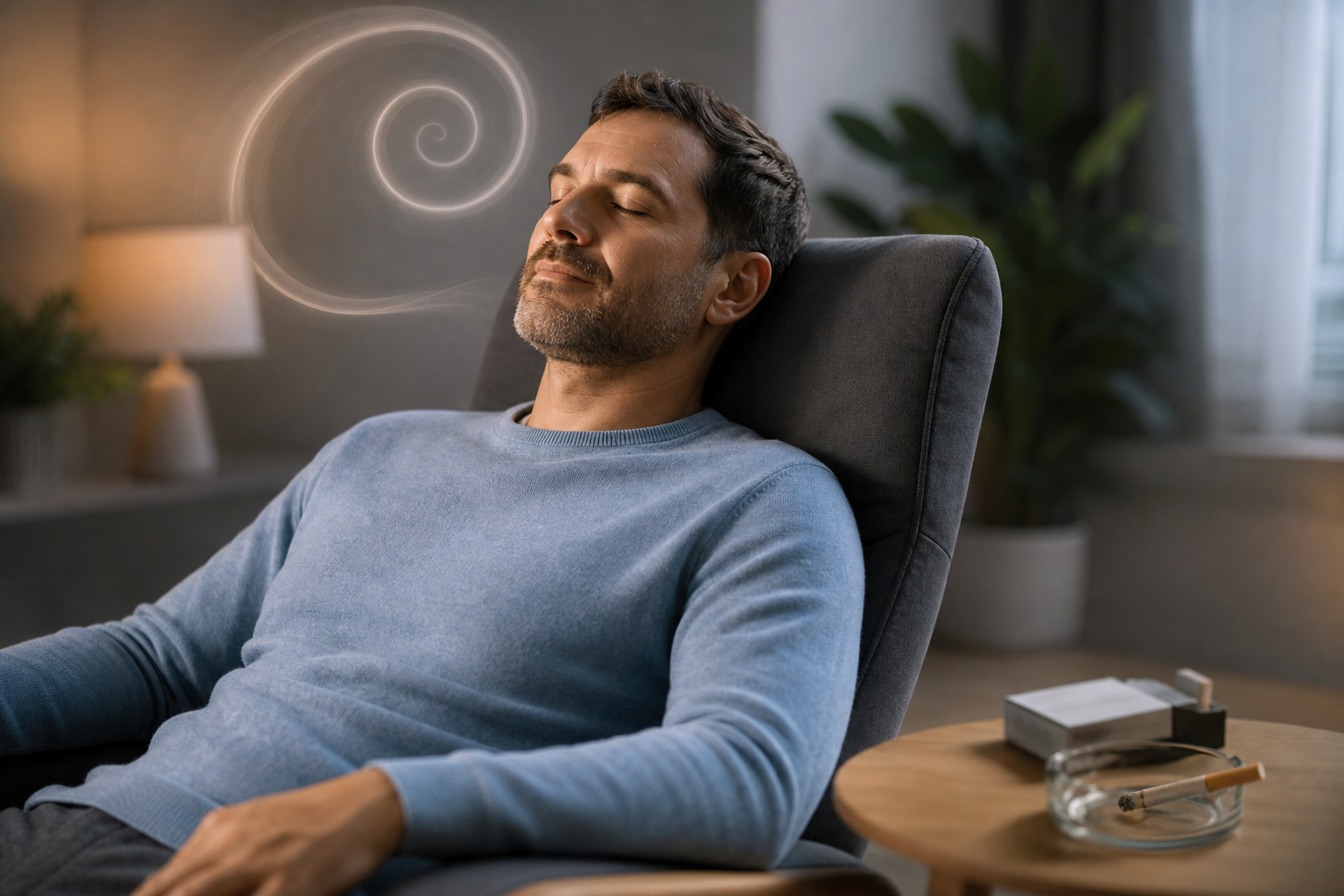
Man relaxing in a chair with eyes closed, with a spiral of smoke behind him and a cigarette in an ashtray nearby

This article explains the benefits of hypnosis for quitting smoking, how it works, and where it fits within an overall quitting strategy. This is an informational guide designed to help you understand the evidence, the process, and the potential advantages of using hypnosis as part of your journey.

Quitting smoking is one of the most important decisions a person can make for their long-term health. While traditional methods such as nicotine replacement, medication, and counseling are widely used, many people also explore complementary approaches like hypnosis to support the mental and emotional aspects of quitting.

Want the complete quit-smoking roadmap?

This article focuses specifically on hypnosis. For the full subconscious approach to becoming a non-smoker, start here:

👉 Subconscious Quit Smoking: The Complete Guide

Read More

Quit Smoking Hypnosis vs Nicotine Patches: Which Works Better?

Woman meditating as cigarettes fade away and a glowing brain suggests recovery from addiction

For years, smokers have been told that nicotine patches and gum are the best way to quit. But if you’ve tried those and still struggled, you’re not alone. That’s why more people are turning to quit smoking hypnosis—a method that targets the real cause of the habit: your subconscious patterns. In this article, we’ll explore how hypnosis compares to traditional nicotine replacement therapy—and why it may be the more effective long-term solution.

Most smokers don’t fail because they lack motivation.
They fail because they’re using the wrong tool for the real problem.

When you’re trying to quit, you’ll hear the same advice over and over:

“Use the patch.”
”Try nicotine gum.”
“Ease your way off with a vape.”

But if those worked, wouldn’t you already be free?

The truth is, traditional nicotine replacement therapy (NRT) doesn’t work for most people—because nicotine isn’t actually the problem.

That’s why more people are turning to quit smoking hypnosis to stop for good.

Looking for the complete quit-smoking roadmap?

This article compares hypnosis and nicotine patches. For the full subconscious approach to becoming a non-smoker, start here:

👉 Subconscious Quit Smoking: The Complete Guide

Read More